Trump waives new Russia sanctions, drawing criticism over Ukraine
Trump waives new Russia sanctions and tariffs as critics warn the relief could support Moscow's war effort.
- Debate level · 74 / 100 contentious
- Source tone · 78 / 100
Debate level shows how sharply the positions reported in a story conflict. Source tone shows how much of our account rests on checkable facts and on-record quotes rather than interpretation. Both are scored by our model from our account of the coverage, out of 100, as in the app.
Based on reports up to .
New here? Turn on Claims Mode to see where each claim comes from.
Claims Mode is on. Select any highlighted passage to see the reporting behind it.
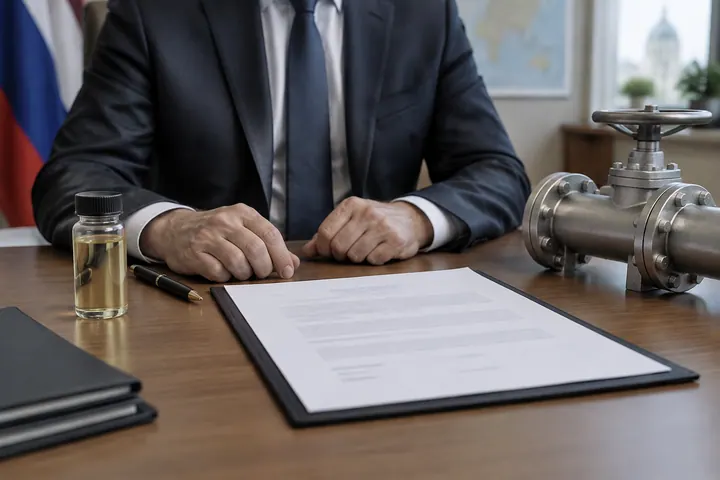 AI illustration
In a rush? Get the brief
- Trump waived new Russia sanctions and tariffs under the Graham Act two days before they were to take effect, while leaving earlier executive-order sanctions in place. The administration also separately authorized Russian diesel imports through April 2027.
- The White House says delaying the measures protects Ukraine-Russia peace talks and allows review of economic and energy effects; Zelenskyy and lawmakers argue the relief reduces pressure on Moscow and rewards Putin.
- The waiver averts immediate tariffs on Russian goods and on major purchasers of Russian oil and gas, including China and India, while the diesel arrangement could affect energy supply and prices.
- The administration plans a 60-day assessment of the package as talks continue. Congress is unlikely to respond immediately while in recess, but lawmakers may challenge the diesel deal after returning.
The key facts, in one minute. Turn on Claims Mode to see who reported each claim, here or in the app. Get the app
In this story · 5 parts
The administration says Donald Trump has waived new Russia sanctions and tariffs under the Lindsey O. Graham Sanctioning Russia and Iran Act. The waiver came two days before the measures were due to take effect. Congress passed the legislation with broad support. Trump signed it the previous month. The administration says immediate enforcement would obstruct peace talks, while critics say reducing economic pressure benefits Russia.
What the waiver suspends
Unlike earlier executive-order sanctions, the waiver puts the Graham Act's new duties and tariffs on hold. The practical effects are:
- Russia sanctions imposed through earlier executive orders remain in force.
- The new duties on Russian goods are suspended.
- Tariffs on major buyers of Russian oil and gas are suspended. The law set those tariffs at up to 100% on imports from the top five purchasers of Russian crude oil or gas, including China and India.
Separate provisions in the broader law also included sanctions against senior Russian figures, including Putin, Russian financial institutions, and Moscow's "shadow fleet" of vessels used to circumvent existing embargoes. This account does not specify whether those separate sanctions are suspended.
One separate suspended provision illustrates the scale of the new measures:
Axios said the waiver avoids immediate new U.S. economic pressure on China and India over their Russian oil purchases.
Peace-talk and sanctions arguments
White House spokesperson Taylor Rogers said the administration views the law as granting Trump authorities to pursue a peaceful resolution while talks continue. She said immediate enforcement would obstruct negotiations for a durable peace between Ukraine and Russia, while Trump retains the ability to use those powers later if doing so serves national interests.
On the broader sanctions package, Secretary of State Marco Rubio said the administration would assess its effects on the U.S. and global economy over 60 days. He said Trump wanted time to examine a package that includes tariffs and sanctions on other countries while global energy supplies are under pressure.
Critics dispute the administration's peace rationale, arguing that reducing economic pressure benefits Russia rather than advances peace. Volodymyr Zelenskyy warned that sanctions relief would encourage Russia to continue or intensify attacks on Ukraine rather than end the war. He said the Graham Act could have helped enormously by imposing effective pressure on Russia, arguing that restricting Ukraine's retaliation and lifting sanctions cannot bring peace.
Kirill Dmitriev welcomed the suspension as historic, arguing that the sanctions would primarily inflict serious damage on the U.S. economy and global markets. He also maintained that economic cooperation between the United States and Russia benefits both countries.
The separate diesel arrangement
Separate from the Graham Act waiver, the administration's earlier diesel arrangement waived sanctions on Russian diesel exports through April 2027 and authorized imports of Russian diesel to increase supply. CNBC reported that the temporary diesel waiver was intended to ease a supply crunch caused by the war in Iran.
The separate diesel arrangement also drew criticism. Representative Mike Lawler said he understood the need to reduce oil and diesel prices but opposed doing so by directing money to Putin while Russia continued its war in Ukraine.
Zelenskyy described the diesel agreement as a first step and predicted that the administration would continue granting sanctions relief, potentially extending it into other areas.
Congressional resistance
Both the House and Senate were in recess until after Election Day when Trump issued the Graham Act waiver. The Associated Press reported that an immediate congressional response to the Graham Act waiver was unlikely during the recess, despite lawmakers' pledges to resist the separate diesel deal.
Addressing the Graham Act waiver, Senator Thom Tillis called it irresponsible and an unacceptable capitulation to Vladimir Putin. Citing the Senate's 86–11 vote for the law, he argued that addressing the Iran war would be a better route to lower energy prices than helping Putin.
On the Graham Act waiver, Republican lawmaker French Hill called for increasing rather than easing economic pressure on Russia. Democrat Don Beyer argued that the Graham Act waiver disregarded Congress's attempt to punish Russia for its war.
Axios assessed that the Graham Act waiver could put Republican candidates in the position of defending Trump's warmer relationship with Russia during the midterm campaign.
On the separate diesel agreement, Representative Gregory Meeks introduced legislation intended to block the diesel agreement, characterizing it as corrupt and contrary to U.S. principles.
Sources
32 reports from 21 outletsFrom Bloomberg, New York Times, Axios and 18 more
Bloomberg5
- Rockstar Rebuilt Itself to Make GTA VI (opens in a new tab)
- Trump’s Russia Sanctions Waiver Called Mistake by GOP Allies (opens in a new tab)
- Trump Waives Russia Energy Tariffs, Sanctions in Graham Law (opens in a new tab)
- Trump Puts New Russia Sanctions on Hold (opens in a new tab)
- Russia Sanctions Waived, AI Debt Concerns, Making 'GTA VI' (opens in a new tab)
New York Times3
Axios2
BBC2
NBC News2
The Hill2
The Independent2
ABC News
Al Jazeera
CNBC
Courthouse News Service
Daily Mail
Evening Standard
Financial Times
i News
NPR
RTE
The Guardian
The Seattle Times
TheJournal.ie
TIME
How this story was made. Drafted with AI from 32 reports by 21 outlets. Each highlighted line in Claims Mode links to the reporting behind it. Debate level shows how sharply the positions reported in a story conflict. Source tone shows how much of our account rests on checkable facts and on-record quotes rather than interpretation. Both are scored by our model from our account of the coverage, out of 100, as in the app. How we make stories · Corrections · Spotted an error? Tell us
Similar stories
Trump's Russian Diesel Deal Draws Allied Opposition
Trump's Russian diesel agreement drew allied and congressional opposition as he called for Ukraine to replace Zelensky.
Ukraine reports strikes after Trump’s energy ceasefire declaration
Ukraine reported fresh energy strikes after Trump announced a ceasefire that Moscow did not confirm.
G7 Agrees Emergency Oil and Diesel Release
G7 leaders agreed to release up to 100 million barrels of reserves; Trump ruled out a diesel export ban.