G7 Agrees Reserve Release; Trump Rules Out Diesel Export Ban
G7 leaders agreed to release up to 100 million barrels of reserves; Trump ruled out a diesel export ban.
- Debate level · 48 / 100 mixed
- Source tone · 76 / 100
Debate level shows how sharply the positions reported in a story conflict. Source tone shows how much of our account rests on checkable facts and on-record quotes rather than interpretation. Both are scored by our model from our account of the coverage, out of 100, as in the app.
Based on reports up to .
New here? Turn on Claims Mode to see where each claim comes from.
Claims Mode is on. Select any highlighted passage to see the reporting behind it.
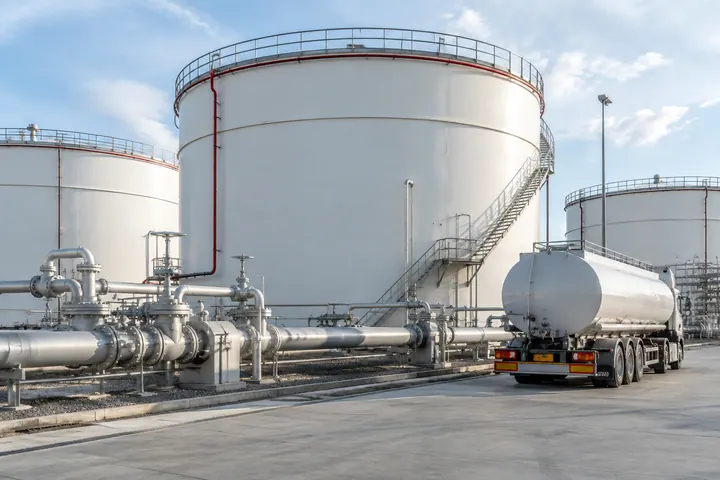 AI illustration
In a rush? Get the brief
- G7 leaders agreed to coordinate the release of 100 million barrels of emergency crude oil and diesel reserves through the International Energy Agency.
- The G7 release is to begin immediately, run for four months and include a substantial front-loaded diesel release during the first 20 days.
- The G7 committed to refrain from energy-product export restrictions among member countries.
- The exact division of the 100 million barrels between diesel, crude and other products, and the participating countries, was not specified.
The key facts outlets agree on. Turn on Claims Mode to see who reported each claim, here or in the app. Get the app
In this story · 4 parts
On Friday, G7 leaders announced a plan to coordinate the release of up to 100 million barrels of emergency crude oil and diesel reserves through the International Energy Agency. The release is intended to ease supply pressures and shield households and businesses from price shocks. The announcement did not specify how much would be diesel, crude or other petroleum products, or which countries would supply the stocks. Energy Aspects questioned the nature of the agreement, describing it as political rather than a specific, binding commitment. It said the headline volume appeared designed to dissuade Trump from imposing an export ban, rather than establish a detailed, enforceable commitment to release stocks.
Three sources familiar with EU discussions told Reuters that France's proposal had envisaged European countries releasing 50 million barrels of diesel and IEA members releasing 50 million barrels of crude oil. The final announcement did not provide a product or country allocation.
G7 leaders also agreed to coordinate refinery maintenance schedules and temporarily raise refinery operating rates where feasible. Emmanuel Macron argued that coordinated stock releases and more flexible refinery production were needed to bring down petroleum-product prices, particularly diesel, amid acute pressure on that market.
Implementation and refinery response
- The release will begin immediately. It will last four months and include a substantial, front-loaded diesel release by G7 members and partners within the first 20 days. The announcement does not identify the countries supplying those stocks.
- After the initial release, the G7 will meet within the IEA framework to assess whether further diesel releases are needed.
The G7 invited the IEA to monitor implementation of commitments and the measures' impact on energy security and market stability. A follow-up report is due within 20 days of the announcement.
Export-ban dispute and diesel prices
The agreement also commits members to refrain from restrictions on energy exports to one another. Before the agreement, Donald Trump had threatened a ban if European countries did not release more diesel stocks. Later, he said the United States would not impose a diesel export ban and that a ban had never really been on the table, a characterization at odds with his earlier threat.
Two people familiar with the White House process said an executive order aimed at lowering US diesel prices could be unveiled as early as the following week, though its details could change.
In differing assessments of the global diesel market, Frederic Schneider said diesel is priced on a global market, so a shortage anywhere raises US prices. He said European stocks would help the United States by adding barrels to the global pool rather than by arriving in American ports. Scott Bessent argued that US farmers, truckers and businesses should not be left carrying the burden of a global diesel shortage. David Fyfe and Maros Sefcovic warned that a US export ban would likely tighten supplies outside the United States, raise international diesel prices and hurt Europe.
Fhaheen Khan said the costs extend beyond those buying fuel, as higher diesel prices can spread through transport and supply chains into consumer prices.
Ursula von der Leyen welcomed the decision to avoid export restrictions among allies and pursue an IEA-coordinated release. Keir Mather said Britain's diesel supplies are diverse and resilient, and that people should not be concerned about shortages.
Price relief and supply risks
Oil prices and fuel futures fell after the announcement. Analysts Andy Lipow, Patrick De Haan and Tom Kloza said the release could temporarily lower diesel and gasoline prices, although their estimates of the size of the reduction varied. Ben Cahill and De Haan cautioned that any effect could be limited or short-lived, depending on diesel volumes, release pace, refinery outages and geopolitical disruptions. They pointed to damaged or inaccessible refining capacity and continuing supply disruptions that cannot be resolved simply by releasing stocks.
On longer-term supply constraints, Walt Chancellor argued that the reserve release was not a solution to the underlying global energy problem: the central issue was worldwide supply, especially oil flows through the Strait of Hormuz, rather than diesel inventories alone.
For the wider oil market, Hamad Hussain said a further stock release could produce a slight surplus if the recent increase in Middle East flows were sustained.
Using emergency stocks also carries a trade-off. Jonathan Owens argued that drawing them down can provide near-term breathing space but reduces protection against later supply shocks, without solving underlying refining and market-dependence problems.
Sources
42 reports from 23 outletsFrom Daily Mail, Al Jazeera, BBC and 20 more
Daily Mail4
- Bridalwear shop owner who hung naughty boy, 7, on hook until his face turned blue is cleared of wrongdoing (opens in a new tab)
- G7 approves emergency release of 100million barrels of diesel and crude oil to try and curb soaring prices caused by global shortages (opens in a new tab)
- Trump drops diesel export ban threat before US mid-terms - as Europe agrees to release reserves (opens in a new tab)
- Trump scores release of 'massive amount' of Europe's oil in scramble to bring down gas prices ahead of the midterms (opens in a new tab)
Al Jazeera3
BBC3
Evening Standard3
Shropshire Star3
The Independent3
Bloomberg2
CBS News2
CNBC2
NPR2
Reuters2
The Guardian2
Financial Times
Forbes
Irish Independent
MarketWatch
NBC News
New York Times
Newsweek
North West Evening Mail
RTE
The Hill
The National Scotland
How this story was made. Drafted with AI from 42 reports by 23 outlets. Each highlighted line in Claims Mode links to the reporting behind it. Debate level shows how sharply the positions reported in a story conflict. Source tone shows how much of our account rests on checkable facts and on-record quotes rather than interpretation. Both are scored by our model from our account of the coverage, out of 100, as in the app. How we make stories · Corrections · Spotted an error? Tell us
Similar stories
Trump's Russian Diesel Deal Draws Allied Opposition
Trump's Russian diesel agreement drew allied and congressional opposition as he called for Ukraine to replace Zelensky.