Trump Rejects Iran Proposal to Reopen Strait of Hormuz
Donald Trump rejected Iran’s offer to reopen the Strait of Hormuz in exchange for lifting a US naval blockade, removing oil sanctions and restoring a regional ceasefire.
- Debate level · 68 / 100 contentious
- Source tone · 76 / 100
Debate level shows how sharply the positions reported in a story conflict. Source tone shows how much of our account rests on checkable facts and on-record quotes rather than interpretation. Both are scored by our model from our account of the coverage, out of 100, as in the app.
Based on reports up to .
New here? Turn on Claims Mode to see where each claim comes from.
Claims Mode is on. Select any highlighted passage to see the reporting behind it.
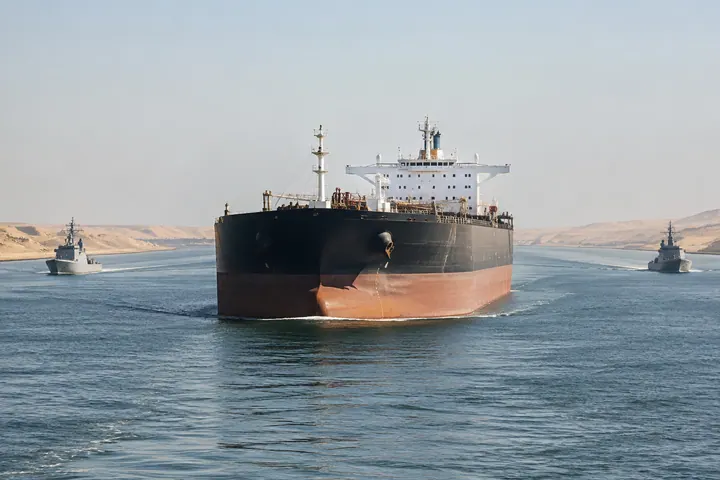 AI illustration
In a rush? Get the brief
- Donald Trump rejected Iran's latest proposal to reopen the Strait of Hormuz and restart negotiations.
- Iran proposed reopening the Strait of Hormuz and resuming nuclear talks within seven days if the US lifted its naval blockade, removed oil-sale sanctions and restored a regional ceasefire.
- US envoys Steve Witkoff and Jared Kushner held indirect negotiations with Iranian Foreign Minister Abbas Araghchi in New York, with Qatar passing messages between the sides.
- The parties remain divided because Iran prioritises Hormuz and the US naval blockade, while the Trump administration demands nuclear concessions and contests Iran's authority to set terms for the strait.
The key facts outlets agree on. Turn on Claims Mode to see who reported each claim, here or in the app. Get the app
In this story · 7 parts
Donald Trump publicly rejected Iran’s conditional proposal to reopen the Strait of Hormuz and resume negotiations, calling it unacceptable. The proposal makes reopening the strait and resuming talks conditional on US action. Foreign Minister Abbas Araghchi acknowledged Trump’s public rejection but said Iran would await a definitive official US response through mediators and remained ready to negotiate.
The strait normally carries about one-fifth of global oil and gas supply.
Conveyed by Araghchi, Iran’s proposal would reopen Hormuz and resume nuclear talks within seven days if the US lifted its naval blockade, removed sanctions on Iranian oil sales and restored a regional ceasefire. It set out three conditions:
- Lift the US naval blockade.
- Remove sanctions on Iranian oil sales.
- Restore a regional ceasefire.
The sides remain divided over those priorities. The US side prioritises nuclear concessions and rejects Iran’s claimed authority to dictate terms for Hormuz, while Iran puts the blockade, sanctions and the waterway’s reopening at the front of any deal.
Iran’s government said it would not soften those conditions. The current proposal calls for restoring a regional ceasefire; Iran said its conditions were consistent with the earlier Islamabad memorandum of understanding, a June ceasefire agreement between the United States and Iran that collapsed in early July.
An offer rejected, but mediation continues
Axios reported that US envoys Steve Witkoff and Jared Kushner held indirect discussions with Araghchi in New York, on the margins of the UN General Assembly, with Qatar relaying messages. It also reported, citing a regional source with knowledge of the negotiations, that Qatari mediators presented a compromise proposal to both governments after discussing Tehran’s original plan.
Trump forecast that further US-Iran talks could take place because he believes Iran wants an agreement. Separately, two regional sources told Axios they expected another indirect round, with Qatar continuing efforts to revise the compromise text. Neither forecast confirmed that talks had been scheduled or that either government would accept an agreed text.
US and Iranian positions
Trump’s position is that Iran is seeking concessions it might have gained earlier and has weakened its hand by overplaying its leverage. US Ambassador to NATO Matthew Whitaker backed that view, describing the offer as half-measures and illusory deals intended to improve Iran’s international image.
Senator John Kennedy also called the offer unserious and argued that sanctions and the blockade should continue. He said Washington would eventually have to reach a settlement to open the strait or escalate, while opposing the deployment of US troops.
Araghchi argued that negotiation is the only route to ending the conflict and that Washington must demonstrate it is not pursuing the overthrow of Iran’s government.
Iranian President Masoud Pezeshkian said the United States must decide whether it wants the war to stop. Separately, he said Iran would admit UN nuclear inspectors under a potential long-term ceasefire arrangement.
“We only care about our national interests. We are ready for negotiations.”
Iran says Trump’s public refusal is distinct from the definitive official mediated response it awaits.
Traffic disruption and economic pressure
BBC and CNBC reporting described Hormuz as effectively closed or severely disrupted since the war began, even though limited escorted movement has continued. The strait normally carries about one-fifth of global oil and gas supply.
US officials and Trump said substantial oil volumes and dozens of ships were transiting the Strait of Hormuz under US protection. Those reported US-protected transits occurred alongside the broader disruption described by the BBC and CNBC.
US officials said roughly 60 million barrels had transited through Hormuz over 72 hours.
CNBC reported that vessel passages had fallen to nine. Trump said 29 vessels had been guided out under military supervision.
Bloomberg reported that Trump’s rejection was followed by rising oil prices and falling US equity-index futures. European energy commissioner Dan Jorgensen described the disruption as both an energy-price crisis and a supply crisis.
Sanctions and market pressure
Saudi Foreign Minister Faisal bin Farhan argued that attempts to close Middle Eastern waterways endanger global energy security and that freedom of navigation must be protected. The White House says Operation Economic Outcast widened secondary sanctions on entities and countries doing business with Tehran. It says the campaign is intended to increase pressure on Iran to halt attacks on vessels in the strait.
Treasury Secretary Scott Bessent said the economic campaign was already affecting Iran, citing flight restrictions imposed on Iranian carriers by Turkey, Oman and the United Arab Emirates. Economists cited by the BBC questioned how certain that assessment was, arguing that sanctions’ effectiveness depends on whether Iran’s major trading partners comply, particularly partners that have maintained commercial links despite earlier US restrictions. China, the biggest buyer of Iranian oil, ignored previous US sanctions and continued to do business with Tehran, the BBC reported.
Bloomberg commentators Dan Williams and Mike McGlone forecast that economic pressure could shape the next phase of diplomacy, citing rising fuel costs and changes in US supply and Chinese demand.
Military risks remain
Iran’s Revolutionary Guards naval forces said they had captured a US unmanned underwater vehicle in the Strait of Hormuz. The claim was an Iranian official statement and was not presented as independently verified in the reporting.
Saudi authorities said the Houthis fired dozens of missiles and drones at Saudi targets. Pezeshkian responded that the Houthis were responsible for their own actions and that Iran was not at war with Saudi Arabia.
US Ambassador David Perdue said Trump had warned China that direct or indirect help to Iran, including intelligence or military support, would be unacceptable. Trump has also left further military action as a possibility, saying additional US strikes on Iran could occur in coming weeks.
Representative Jim Himes argued that threats to annihilate Iran were nonsensical, saying Tehran had endured six months of severe US and Israeli pressure despite major military losses. He argued that Iran’s endurance demonstrated the limits of the existing military approach, short of attacks on civilians. Himes also forecast that continued attacks on shipping could push oil toward $120 (£90.67) a barrel and diesel toward $8 (£6.04) a gallon, with possible consequences for US midterm elections.
Omani Foreign Minister Badr Albusaidi urged self-restraint, foresight and dialogue, arguing that only consensual political solutions can create sustainable understandings. His position contrasts with Kennedy’s preference for maintaining coercive pressure unless Tehran changes course, while aligning with Araghchi’s insistence that a negotiated settlement is necessary.
Outlook
Trump also predicted that the war would end soon and that oil prices would fall substantially toward pre-war levels. He linked that forecast to his stated objective of preventing Iran from obtaining a nuclear weapon. The prediction contrasts with current market strain and the possibility of new strikes.
No source in the reporting established when a ceasefire or durable reopening of the strait might occur. It remains unclear whether the United States will modify its nuclear and sanctions demands, whether Iran will move from its stated conditions, or whether both governments will accept an agreed text arising from Qatar’s reported compromise proposal. Al Jazeera raised, as a possibility rather than an established fact, that Trump’s refusal may be intended to press Tehran into making additional concessions.
Sources
13 reports from 9 outletsFrom Bloomberg, Axios, New York Times and 6 more
Bloomberg3
Axios2
New York Times2
Al Jazeera
BBC
CBS News
CNBC
Sky News
Washington Post
How this story was made. Drafted with AI from 13 reports by 9 outlets. Each highlighted line in Claims Mode links to the reporting behind it. Debate level shows how sharply the positions reported in a story conflict. Source tone shows how much of our account rests on checkable facts and on-record quotes rather than interpretation. Both are scored by our model from our account of the coverage, out of 100, as in the app. How we make stories · Corrections · Spotted an error? Tell us
Similar stories
US and Iran Resume Military Strikes
A renewed US-Iran military exchange has brought regional missile retaliation, disputed civilian-casualty and maritime claims, shipping insecurity, competing diplomatic strategies and forecasts of significant economic consequences for UK households.

Trump’s Iran Remarks Prompt California Threat Monitoring
Newsom ordered threat monitoring after Trump named California cities; the White House and fact-checkers disputed critics’ interpretation.
Trump's Russian Diesel Deal Draws Allied Opposition
Trump's Russian diesel agreement drew allied and congressional opposition as he called for Ukraine to replace Zelensky.