Russia frees Stephen Hubbard; Trump says no swap
Russia freed American teacher Stephen Hubbard after more than four years; Trump’s claim of a cost-free release drew challenges.
- Debate level · 64 / 100 contentious
- Source tone · 82 / 100
Debate level shows how sharply the positions reported in a story conflict. Source tone shows how much of our account rests on checkable facts and on-record quotes rather than interpretation. Both are scored by our model from our account of the coverage, out of 100, as in the app.
Based on reports up to .
New here? Turn on Claims Mode to see where each claim comes from.
Claims Mode is on. Select any highlighted passage to see the reporting behind it.
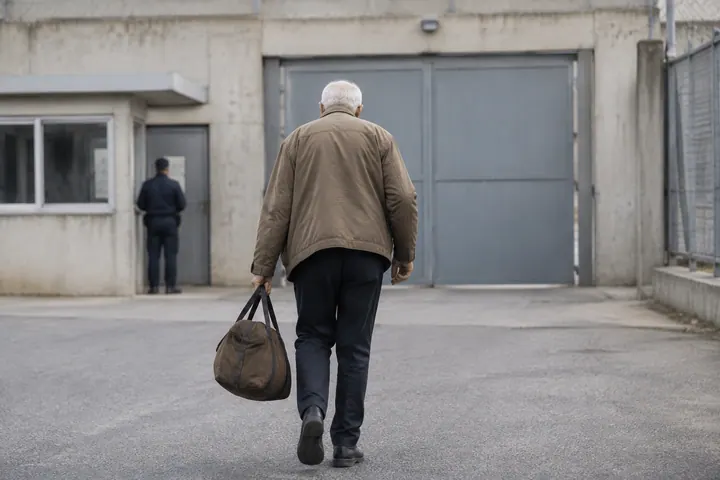 AI illustration
In a rush? Get the brief
- Russia released Stephen Hubbard, a 74-year-old Michigan teacher the U.S. deemed wrongfully detained, after more than four years in captivity following his seizure in eastern Ukraine in 2022.
- Trump said no swap or concession was required, while former ambassador John Herbst and other critics argued U.S. actions benefiting Russia made the release an effective exchange; Hubbard’s mercenary conviction was also disputed by the U.S., his lawyers and family.
- The release reunites Hubbard with his family but he is reported to be in a fragile condition after alleged abuse in detention, and it highlights disputes over U.S. diplomacy with Russia during the Ukraine war.
- Hubbard is expected to reunite with relatives, possibly living with his sister in Colorado, while U.S.-Russia-Ukraine technical talks are expected around November 10.
The key facts, in one minute. Turn on Claims Mode to see who reported each claim, here or in the app. Get the app
In this story · 3 parts
Russia released Stephen Hubbard on Wednesday after more than four years in detention, freeing a 74-year-old retired teacher from Michigan whose imprisonment the United States had declared wrongful. Russian forces seized him in eastern Ukraine in April 2022.
The announcement of Hubbard's release came from a Wednesday meeting between Steve Witkoff and President Vladimir Putin.
President Donald Trump said he had directly asked President Vladimir Putin to free Hubbard during a telephone call the previous week. Trump said, "The United States, out of respect for President Trump, was not required to give anything in return" and that "There was no ‘swap’ necessary for this release."
Former ambassador John Herbst challenged the claim that the release was cost-free. According to NBC News, he said it followed the freeing of Russian war blogger Mikhail Zvinchuk after the United States did not seek his extradition. Herbst regarded that as an effective exchange, rather than a free gift to Washington.
The disputed mercenary case
A Moscow court convicted Hubbard of mercenary activity in a closed trial in October 2024 and sentenced him to six years and 10 months in prison. Russian prosecutors alleged that he joined a Ukrainian territorial-defense unit, received training, weapons and ammunition, and was promised $1,000 (£746.67) a month.
The State Department called the charges fabricated. Hubbard’s legal team, including Martin De Luca, disputed the Russian account, saying Hubbard maintained that the charges were false and that he had not belonged to a combat or military unit.
His family argued that his pro-Russian views and his age made it unlikely he had taken up arms. His sister, Patricia Hubbard Fox, rejected the mercenary allegation and accused Russia of using her brother as bait in Putin’s war with Ukraine.
Fox alleged that Hubbard suffered beatings and starvation in captivity and said he now has an enlarged heart. She said he had been in perfect health when detained in 2022 and that "He really thought he was going to die in prison."
Martin De Luca said Hubbard was in a fragile state but was OK.
Diplomacy and its costs
Kremlin spokesman Dmitry Peskov said Putin released Hubbard on humanitarian grounds. Steve Witkoff thanked Putin and praised him as a humanitarian, linking that description to his role in allowing Hubbard to return to his family.
Trump said imposing sanctions on Russia would have caused negotiations over Hubbard’s release to halt completely. He argued more broadly that engagement and commercial arrangements with Moscow were intended to keep Russia in peace negotiations and benefit American consumers.
Vox argued that recent benefits delivered to Russia, including sanctions waivers and a diesel arrangement, undercut Trump’s portrayal of a cost-free release. Volodymyr Zelenskyy argued that the diesel arrangement was a gift to Putin that would help finance Russia’s war.
Witkoff said technical-level trilateral talks would follow his meeting with Putin. The Kremlin said it had agreed in principle to resume those U.S.-Russia-Ukraine negotiations around November 10, focusing on how to guarantee the security of Ukraine and Russia.
Witkoff described discussions in Oslo as productive and said they had laid the groundwork for a successful end to hostilities. Yuri Ushakov said those talks contained little useful material for resolving the war, according to Axios.
For Hubbard’s family, Joseph Coleman said Putin’s humanitarian move was deeply appreciated. Speaking on the family’s behalf, he said relatives had feared Hubbard would die without seeing his children or grandchildren again.
Fox told The Associated Press that, when she spoke with Hubbard after his release, he was laughing and could hardly believe it was happening. She said the family was anticipating a reunion and that Hubbard would probably live with her in Colorado.
Sources
19 reports from 13 outletsFrom CBS News, New York Times, Daily Mail and 10 more
CBS News3
- Son of detained American Stephen Hubbard reacts to Russia releasing him after 4 years (opens in a new tab)
- Stephen Hubbard's son thanks Putin and Trump for father's release from Russian jail (opens in a new tab)
- Stephen Hubbard's son after his release from Russian prison: "I want to embrace him" (opens in a new tab)
New York Times3
Daily Mail2
- Is the iPhone Duo a gimmick or is time to join the foldable revolution? SHIVALI BEST tests Apple's £2,000 device to find out if two screens are really better than one (opens in a new tab)
- Russia frees US prisoner Stephen Hubbard as Trump claims Putin asked nothing in return 'out of respect for me' (opens in a new tab)
Fox News2
Axios
Bloomberg
NBC News
NPR
The Guardian
The Independent
The Seattle Times
TIME
Vox
How this story was made. Drafted with AI from 19 reports by 13 outlets. Each highlighted line in Claims Mode links to the reporting behind it. Debate level shows how sharply the positions reported in a story conflict. Source tone shows how much of our account rests on checkable facts and on-record quotes rather than interpretation. Both are scored by our model from our account of the coverage, out of 100, as in the app. How we make stories · Corrections · Spotted an error? Tell us
More to read
Trump's Russian Diesel Deal Draws Allied Opposition
Trump's Russian diesel agreement drew allied and congressional opposition as he called for Ukraine to replace Zelensky.
Trump waives new Russia sanctions and tariffs
Trump waives new Russia sanctions and tariffs as critics warn the relief could support Moscow's war effort.
WFP cuts food aid to 700,000 Palestinians
WFP has reduced food assistance for 700,000 Palestinians across Gaza and the West Bank, citing funding shortages.