Avanti to enter public ownership with promised service upgrades
Avanti will transfer to public ownership in March 2027, with infrastructure investment planned to improve reliability.
- Debate level · 54 / 100 mixed
- Source tone · 74 / 100
Debate level shows how sharply the positions reported in a story conflict. Source tone shows how much of our account rests on checkable facts and on-record quotes rather than interpretation. Both are scored by our model from our account of the coverage, out of 100, as in the app.
Based on reports up to .
New here? Turn on Claims Mode to see where each claim comes from.
Claims Mode is on. Select any highlighted passage to see the reporting behind it.
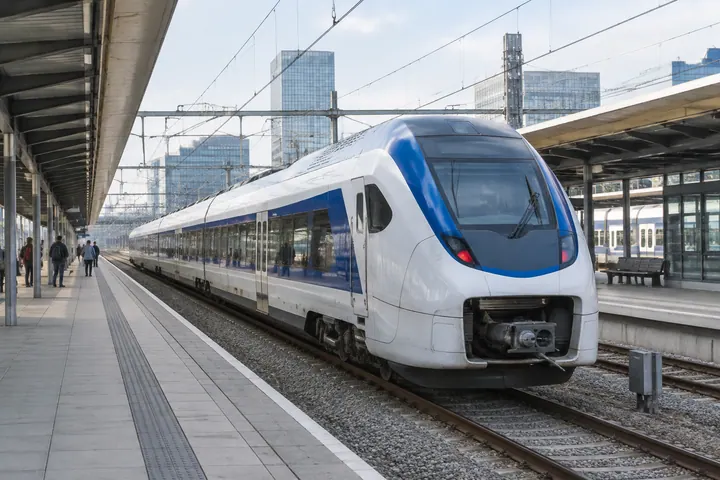 AI illustration
In a rush? Get the brief
- The government will bring Avanti West Coast into public ownership in March 2027, with reporting placing the contractual handover on 7 March.
- Avanti West Coast's current operating contract is due to expire on 7 March.
- The government will provide an extra £10 million for power and signalling maintenance, in addition to £840 million already pledged for West Coast Main Line infrastructure.
- 7.1% of planned Avanti West Coast services were cancelled between April and June, compared with 8% for CrossCountry.
The key facts outlets agree on. Turn on Claims Mode to see who reported each claim, here or in the app. Get the app
In this story · 4 parts
Transport Secretary Heidi Alexander has confirmed that Avanti West Coast will move into public ownership on 7 March 2027, when its operating contract expires. Avanti runs services from London to Manchester and Liverpool. Andy Mellors, Avanti's managing director, said the operator would work with the government to seek a seamless transition while continuing to serve customers and communities.
The case for and against the transfer
Alexander argues that Avanti's underperformance justifies ending private operation because passengers have borne the cost, a rationale focused on the operator. Ministers said infrastructure issues on the West Coast Main Line resulting from long-term underinvestment are the biggest cause of disruption for passengers.
Mellors disputes that performance rationale, offering a contrasting assessment of Avanti's record over six years. He argues that fleet refurbishment, new Evero trains and an increase in services have delivered significant improvements, giving customers greater choice, capacity and connectivity.
The transfer forms part of Labour's wider programme of returning train operators to public ownership. Chiltern Railways became the sixth operator to enter public ownership under Labour earlier in September 2026. Alexander says public ownership of essential services connects people to opportunity and supports growth, with passengers rather than shareholders as the priority.
Councillor Phil Riley welcomed the decision to bring Avanti into public ownership on 7 March 2027. He argues that railway privatisation has failed: competition between fragmented operators has not produced lower prices or better services, while separating track from train operators has brought no noticeable performance improvement. Public ownership, he argues, will reunite track and train in the public interest.
Operator fees and wider rolling-stock policy
The government argues that public ownership is intended to make journeys cheaper, more reliable and more passenger-focused. It says taxpayers will no longer pay fees to a private Avanti operator once the transfer takes place.
Alongside the Avanti announcement, the government will explore whether Great British Railways should directly own newly ordered trains, assessing the option case by case. This remains a wider, exploratory rail-policy option rather than part of the confirmed Avanti transfer. Alexander argues that leasing creates financing and transaction costs, as well as investment returns, borne by taxpayers and passengers. She says direct ownership should be considered where it best serves them. She also said franchised train operators spent more than £4 billion ($5.3 billion) in 2024 leasing and maintaining trains they did not own.
Union leaders have separately argued for changes to the rolling-stock model. RMT general secretary Eddie Dempsey advocates ending the present arrangement, arguing that private rolling-stock companies take money needed by the railways. Aslef general secretary Dave Calfe makes a related argument about profits and dividends leaving the railway. He says billions could instead be invested in the network and used to help keep passenger fares down.
Service changes and planned passenger improvements
The Independent reported that Avanti removed about 38 daily weekday services for six weeks from 20 July 2026 following a Department for Transport request for cost reductions. The operator typically runs 248 services a day.
Although the handover date is confirmed, the government says the accompanying infrastructure work is planned and intended to cut delays, reduce disruption and improve passengers' journeys. It plans an extra £10 million ($13.3 million) specifically for power and signalling maintenance by the end of 2027, while £840 million ($1,113 million) had already been pledged for West Coast Main Line infrastructure.
The planned programme includes improved onboard Wi-Fi and revised timetables intended to make services faster and more reliable, particularly on routes serving Manchester; the timetable changes, aimed at improving reliability and punctuality on routes in and out of the city, will be introduced from December 2026. The government has also said Euston station is set to receive a £50 million ($66.3 million) upgrade over three years.
Further details of the improvement plan are expected before the March 2027 handover, according to the North Wales Chronicle. The newspaper also reported that passengers in North Wales could see changes to services linking the region with London and other major cities after the transfer. The government has also promised passengers travelling to and from Carlisle a more reliable railway following the planned transfer.
Welcoming public ownership, Sagal Abdi-Wali pointed to the experience of Camden residents who rely on Euston, saying passengers had endured unreliable services and crowded conditions while waiting for trains.
Sources
15 reports from 15 outletsFrom Daily Mail, Evening Standard, Express and 12 more
Bury Times
Chester Chronicle
Daily Mail
Evening Standard
Express
Lancashire Telegraph
Mirror
North Wales Chronicle
Sky News
The Guardian
The Independent
The National Scotland
The Times
Warrington Guardian
Westmorland Gazette
How this story was made. Drafted with AI from 15 reports by 15 outlets. Each highlighted line in Claims Mode links to the reporting behind it. Debate level shows how sharply the positions reported in a story conflict. Source tone shows how much of our account rests on checkable facts and on-record quotes rather than interpretation. Both are scored by our model from our account of the coverage, out of 100, as in the app. How we make stories · Corrections · Spotted an error? Tell us