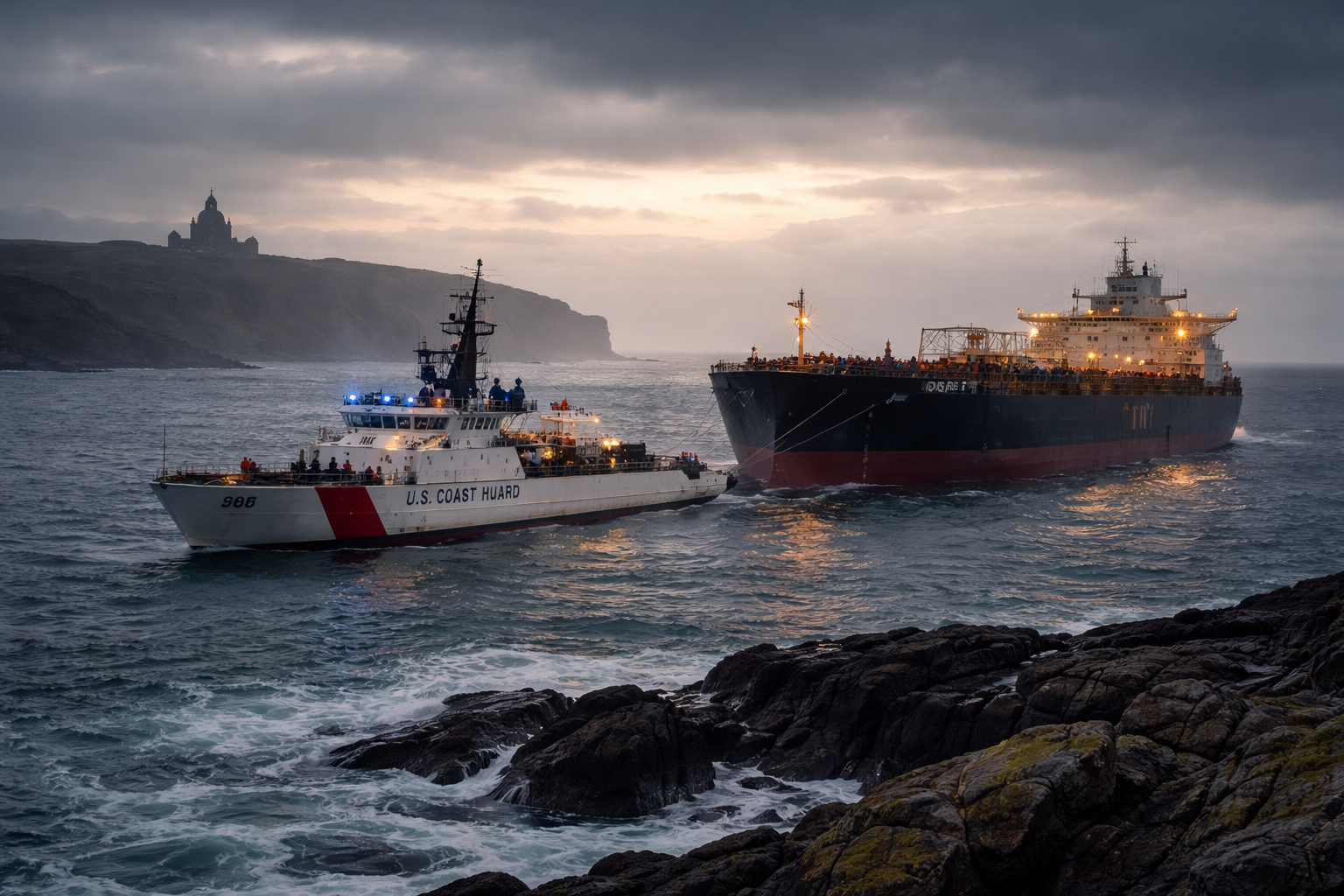
US moves captured oil tanker captain and first officer from Scottish waters amid legal action. The dispute centers on the tanker Marinera, which US forces seized on 7 January and escorted into the Moray Firth off eastern Inverness. Solicitor Aamer Anwar lodged a petition for judicial review in Scotland on behalf of the captain's wife seeking to halt any removal of the captain and first officer. Solicitor General Ruth Charteris told the court that a mutual legal assistance request from US authorities on 16 January had initially been granted with assurances but was later withdrawn, a development ministers say limited their options.
How it unfolded
The UK government backed the operation, describing it as lawful action against a vessel allegedly breaking sanctions. Washington has accused the Marinera of transporting oil in breach of sanctions on behalf of Venezuela, Russia and Iran. Russia's transport ministry countered that it had granted the vessel temporary permission to sail under the Russian flag and that no state had the right to use force against properly registered ships. Reporting and court materials say the tanker was formerly known as Bella 1 and was at one point flying the Guyana flag before adopting a Russian registration.
Crew and custody
Lord Young granted a limited interim interdict preventing UK ministers and prosecutors from removing the captain and the crew until the court could consider the issues further. He said the 1978 State Immunity Act meant the court did not appear to have the power to make an order against a foreign government. Twenty-six remaining crew members were brought ashore and held by immigration officials at a hotel in Moray; the court heard five wished to travel to the United States and the remainder planned to return to their home countries. US administration sources told the BBC the seized tanker would be subject to a judicial forfeiture process when it arrives in the United States.
The captain and the first officer are now aboard the US Coast Guard vessel Munro and have departed the United Kingdom's territorial sea.
Solicitor General Ruth Charteris told the court that Scottish ministers and the Lord Advocate had never detained the crew, captain or first officer and had never had them in their control. Dominic Scullion, a Scottish Government lawyer, told the hearing he was not sure whether the captain and the first officer had already left United Kingdom territorial waters.
Legal arguments and reactions
Natia Dzadzama, the captain's wife, said she could not accept what she described as the abduction of an entire crew in Scotland and their removal without observing legal safeguards. Claire Mitchell KC alleged the captain and first officer had not had access to solicitors and that they faced removal from the court's jurisdiction if interim relief was not granted. Claire Mitchell KC also argued that US authorities appeared to be attempting to bypass established extradition procedures. Clare Mitchell KC called the situation highly unsatisfactory. First Minister John Swinney said he was deeply concerned and criticised the poor flow of communication between Scottish and UK ministers. Aamer Anwar said the United States must abide by international treaties and laws as he pressed the family's case. Lawyers for the family said that removing the captain to the United States would bypass extradition processes and could breach his human rights. Solicitor General Ruth Charteris said the withdrawal of a mutual legal assistance request limited what the Lord Advocate and Scottish ministers could do.
Conflicting state claims
Russia's transport ministry said it had given the Marinera temporary permission to sail under the Russian flag and that no state had the right to use force against properly registered vessels. Washington's account, by contrast, accused the vessel of breaching sanctions by carrying oil for Venezuela, Russia and Iran. Court papers and reporting say 26 crew were brought ashore and held by immigration officials at a hotel in Moray. The Solicitor General, however, emphasised that Scottish ministers and the Lord Advocate had never detained or controlled the crew. The court heard conflicting reports about whether crew members had been taken to Aberdeen Airport under the 1971 Immigration Act or were in Inverness. One outlet, the Daily Mail, published an unverified account asserting the operation followed the US military's removal of Nicolas Maduro and his transfer to New York for trial.
What happens next
US officials say the tanker will face a judicial forfeiture process in US courts if moved to the United States. The Scottish court will reconvene to consider the interim interdict and the judicial review lodged by the captain's wife.
State of play
Most reporting agrees that the Marinera was seized on 7 January and brought into the Moray Firth, and that 26 crew were taken ashore and held in Moray. US officials say the captain and first officer were transferred to a US Coast Guard vessel and left United Kingdom territorial waters, while Russia's transport ministry maintains it authorised the vessel to fly the Russian flag and objects to the use of force. Lawyers for the family allege that sending the captain to the United States would circumvent extradition processes and could breach his human rights; ministers say their options were constrained after a mutual legal assistance request was withdrawn, and the court will now consider the interim interdict and related legal challenges.
Built from coverage across multiple outlets and regions.
How this page is made
This page is written from dozens of outlets covering the same event, mixing local and international viewpoints to show the full picture and add context you might otherwise miss. It aims to show where outlets agree, where they report different details, and where opinions diverge, with supporting evidence for key claims and a full source list.
We’re launching The Bias on iOS soon. If you’d like to help beta test the app, reach out on Instagram @thebias_app or email sam@thebias.co.uk.
All sources
- Daily RecordCaptain and first officer of seized Russian-flagged tanker leave Scots waters
- Sky News - UKUS moves captured tanker captain and first officer from UK waters
- Yorkshire PostShip captain rejected ‘crash stop’ to save US tanker crew lives, court told
- The Herald ScotlandDetention of Russian-flagged tanker captain sparks legal action in Scottish courts
- The ScotsmanUS to remove captain of oil tanker off Scottish coast 'imminently'
- BBC - BusinessTanker crash captain denies falling asleep
- Yorkshire PostShip captain denies falling alseep or leaving post before fatal crash
- The ScotsmanWife of seized tanker’s captain wants judicial review of ‘unlawful’ detention
- The ScotsmanCaptain of Venezuelan-linked oil tanker captured by US forces has left Scottish waters, court hears
- The National ScotlandCaptain of US-seized oil tanker 'held in Scotland unlawfully', lawyers tell court
- BBC - ScotlandUS remove tanker captain from UK waters as crew set to leave Scotland
- BBC - UKUS set to move tanker captain from UK waters 'imminently', court hears
- Daily Mail - NewsSeized tanker captain could be removed from UK waters by U.S. vessel, court is told