Overview
The Department for Work and Pensions has activated Cold Weather Payments worth £25 for eligible households after sustained sub-zero temperatures. The payment is triggered when the local average temperature is recorded or forecast as zero degrees Celsius or below for seven consecutive days. The move follows a deep cold snap that prompted amber "cold-health" alerts from the UK Health Security Agency and a spread of snow and ice warnings across the country. The Met Office recorded the coldest night of the winter, with several areas across the Scottish Highlands, Norfolk and Suffolk reaching as low as -12.5C.
Where payments were triggered
Local outlets published region-by-region lists of eligible postcodes. The Argus in Sussex listed Crawley, Horsham, Haywards Heath and Uckfield among the eligible postcodes. The Northampton Chronicle said 15 Northamptonshire postcode areas had been triggered. The Milton Keynes Citizen published a list showing 18 Milton Keynes postcodes now eligible. The Lancashire Post reported eight Lancashire postcode areas as eligible.
Payments are automatic for people on qualifying benefits and should arrive in the same bank or building society account normally used for benefit payments, usually within about 14 working days of the cold period. They should appear on recipients' bank statements with the payment reference 'DWP CWP'.
Discrepancies in reporting
Reports vary on scale: the Argus reported more than 450 postcodes; the BBC reported 697 postcodes; the Independent estimated over 700,000 households across 697 postcode areas; and the Leicester Mercury put eligible people at roughly 673,000. The Warrington Guardian said the new payments were triggered in a total of 246 postcode areas. Cambridge News reported the DWP had activated Cold Weather Payments across nearly 250 postcode areas and said around 500,000 households were eligible. The Independent also reported that over one million households across 802 postcode areas are now estimated to receive a payment.
Health services and emergency response
Health agencies warned that prolonged freezing conditions are likely to increase pressure on hospitals and social care and could lead to a rise in deaths among older and vulnerable people. Ambulance services reported spikes in demand: one trust said 999 calls rose 19% in the most recent week and other services recorded smaller increases. Sheffield’s Royal Hallamshire Hospital temporarily closed its Minor Injuries Unit after it was overwhelmed by ice-related injuries; the unit reopened once demand subsided.
Roads, rescues and public safety
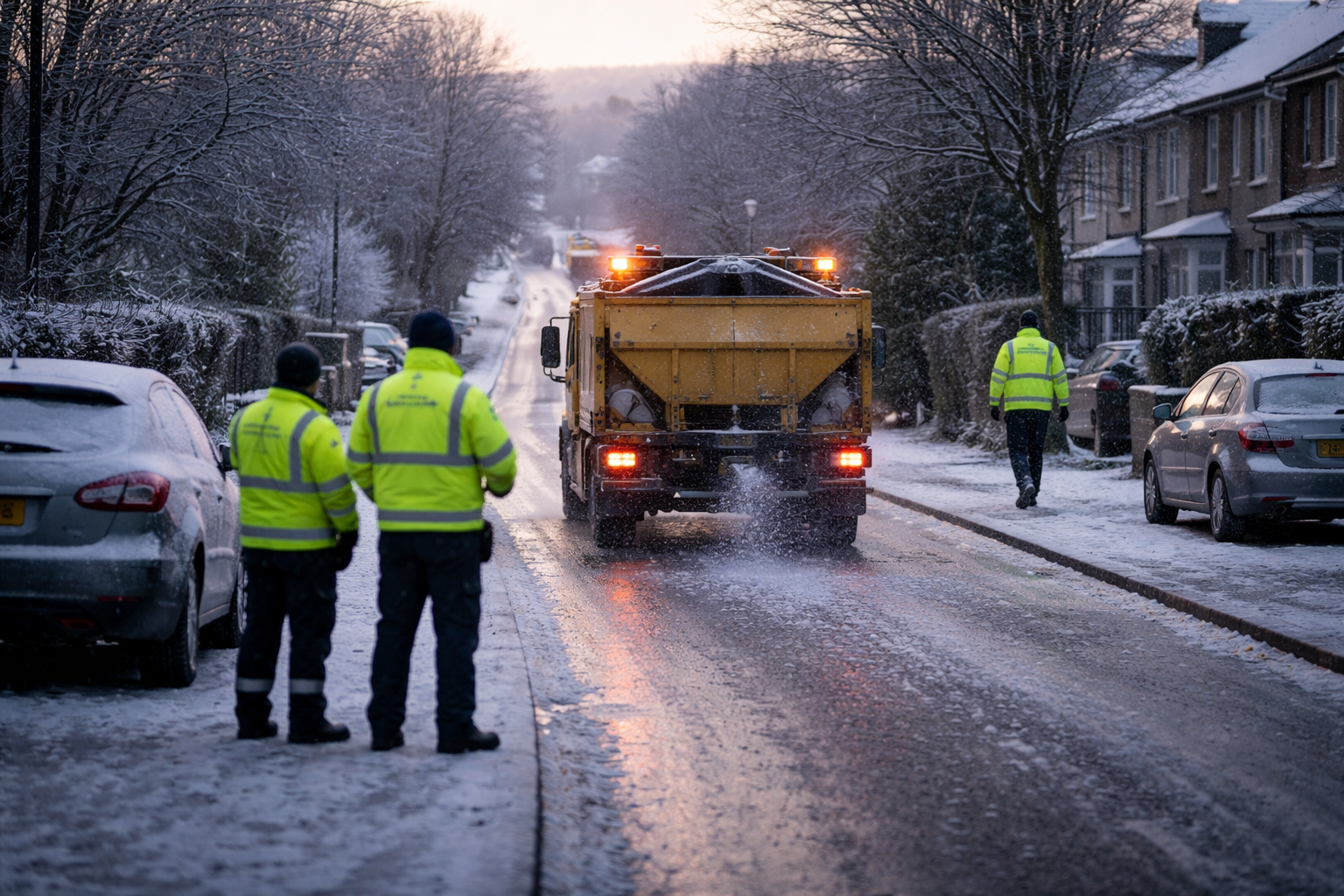
Icy roads produced multiple crashes in places such as Sheffield — an eyewitness described a series of incidents there as "absolute carnage" — while mountain rescue teams were deployed where ambulances could not reach addresses. Councils and highways teams also pre-treated roads: gritting crews in the West Midlands treated more than 270 miles ahead of snow.
Utilities, heating and frontline advice
Water and energy companies urged householders to take simple steps: Thames Water warned pipes can freeze and said it had carried out more than 100 cold-weather repairs a day, while British Gas published troubleshooting tips and said more than 1.2 million customers called engineers about boilers last winter. St John Ambulance issued first-aid guidance on hypothermia, frostbite and slips, and National Grid and ambulance services urged people to stock up on medication and only call 999 for life‑threatening emergencies as Storm Goretti approached.
Community response and warm spaces
Local charities and warm hubs reported strong demand and said they were vital to vulnerable residents. In Lincoln, visitors to Green Synergy described the hub as a vital part of their week and an organiser said the project had received a grant to support warm‑space sessions and hand out blankets and hot water bottles.
Eligibility, administration and practical steps
Cold Weather Payments run from 1 November to 31 March and are paid automatically to people on specified benefits including Pension Credit, income‑based Jobseeker’s Allowance, income‑related Employment and Support Allowance, Income Support, certain Universal Credit claimants and Support for Mortgage Interest. People do not need to apply but should tell Jobcentre Plus if they begin caring for a child under five to ensure they are recorded as eligible, and should contact the DWP if a payment does not arrive. The DWP relies on Met Office equipment to measure temperatures across all eligible UK postcodes. Those who disagree with the judgement are able to appeal directly to the department.
Voices and reactions
Health officials, charities and local figures spoke directly about the human impacts. Dr Agostinho Sousa of UKHSA urged people to check on vulnerable neighbours and warned the cold can increase risks such as heart attacks and chest infections; Caroline Abrahams of Age UK said the plunge in temperatures is hazardous for older people; and Professor Meghana Pandit was quoted in some coverage saying the NHS was under 'extraordinary pressure'. Utility and company spokespeople advised practical steps: Thames Water urged customers to winter‑proof pipes; British Gas engineers published basic checks to try before calling for a repair. Local eyewitnesses and patients described chaotic scenes on icy roads and in overstretched waiting rooms.
State of play
Confirmed: the DWP has activated Cold Weather Payments for affected postcodes and the UKHSA/Met Office have issued amber cold‑health alerts in multiple regions. Claimed or alleged: some outlets put the number of affected postcodes and eligible households much higher than others (estimates range from the low hundreds of postcodes to nearly 700 postcodes and several hundred thousand households). Disputed/unknown: the precise count of triggered postcode areas and the total number of households cited differ between outlets and remain a matter of reporting and DWP measurement. What happens next: the DWP says payments are paid automatically and should appear within about 14 working days; the Met Office and local services warn that Storm Goretti could bring a further spell of snow, ice and disruption over the coming days. A government statement said the payments would be delivered "Alongside our record Pension Credit take-up drive and the Triple Lock guarantee" to help protect pensioners this winter.
How this page is made
This page is written from dozens of outlets covering the same event, mixing local and international viewpoints to show the full picture and add context you might otherwise miss. It aims to show where outlets agree, where they report different details, and where opinions diverge, with supporting evidence for key claims and a full source list.
We’re launching The Bias on iOS soon. If you’d like to help beta test the app, reach out on Instagram @thebias_app or email sam@thebias.co.uk.
All sources
- BBC - BusinessFamilies 'not aware' of winter fuel eligibility
- Lancashire PostCold weather payments: The eight Lancashire postcode areas eligible for £25 payment
- Bournemouth EchoAll the DWP benefits and grants to help beat the cold weather this winter
- Swindon AdvertiserDWP Cold Weather Payments for thousands of pensioners and families with children
- Isle of Wight County Press£25 DWP Cold Weather Payment for thousands of pensioners and families with children
- Stoke SentinelStokies still not getting £25 DWP Cold Weather Payment as postcodes get it twice
- Cambridge NewsThe Cambridgeshire areas where DWP Cold Weather Payments have been triggered
- St Albans ReviewCold weather payments triggered in our area - is your postcode on the list?
- Milton Keynes CitizenCold weather payments: The 18 Milton Keynes postcode areas eligible for £25 payment
- Northampton ChronicleCold weather payments: The 15 Northamptonshire postcode areas eligible for £25 payment
- North Wales LiveList of Welsh postcodes set to receive £25 DWP Cold Weather Payments
- Wales OnlineFull list of postcodes set to receive DWP Cold Weather Payments in Wales this week
- Stoke SentinelFull list of 441 postcodes eligible for DWP Cold Weather Payment
- Wales OnlineFull list of postcodes set to receive DWP Cold Weather Payments in Wales this week
- The Independent - UKCold weather payments triggered in over 400 postcodes – check if you’re eligible
- North Wales LiveMore Welsh postcode areas set to receive £25 DWP Cold Weather Payments
- The Argus BrightonFull list of postcodes across Sussex eligible for cold weather payment
- Nottingham PostDWP set to issue £25 cold weather payments in January if you claim one of six benefits
- The Independent - UKMan who died with dementia aged 24 leaves brain to science
- The Herald ScotlandAll the DWP benefits and grants to help beat the cold weather this winter
- Leicester MercuryDWP £25 payments issued as temperatures drop in England and Wales
- BBC - BusinessWhat are cold weather payments and who can get them?
- Sheffield StarSheffield snow: 'Overwhelmed' Royal Hallamshire Hospital reopens after closing to patients injured on ice
- Stoke SentinelCold Weather Payments mapped as ST postcodes triggered - check if you're eligible
- MyLondonFull list of over 400 postcode areas eligible for DWP Cold Weather Payment right now as more areas triggered
- Belfast LiveHow to check if you're eligible for NI cold weather payments as cold snap continues
- Surrey Live'Rise in death' warning as Surrey issued Amber cold-health alert amid freezing temperatures
- The Independent - UKCold weather payments triggered in nearly 700 postcodes – check if you’re eligible
- Daily Star - NewsBig freeze to chill us to the bone for days as -4C conditions spark huge crisis
- Hull LiveUKHSA warns not to do key thing for more than an hour amid cold snap
- Nottingham PostFresh cold weather alert issued for East Midlands with rise in deaths 'likely'
- Ipswich StarSuffolk warned of 'higher mortality rate' as cold weather alert upgraded
- Lancashire Telegraph BlackburnCold health alert issued in East Lancashire as temperatures set to plummet
- Nottingham PostAll you need to know about Nottinghamshire weather forecast amid 'rise in deaths' warning
- Lancashire TelegraphCold health alert issued for Blackburn as temperatures set to plunge to -6C
- St Albans ReviewAmber health alert issued with freezing temperatures set to grip east of England
- Norwich Evening NewsNorfolk warned of 'higher mortality rate' as cold weather alert upgraded
- Nottingham PostEverything you need to know about the weekend's weather after amber cold health alert issued
- Coventry TelegraphUpdated amber cold alert for Coventry as temperatures to plummet to -7C
- Lancashire TelegraphMountain rescue team called to help ambulance crews reach casualty in icy conditions
- Colchester GazetteEssex residents urged to check on vulnerable people during cold weather
- BBC - EnglandGritting crews treat 270 miles of road before snow
- Impartial ReporterCold snap takes its toll with icy and ungritted roads leaving conditions difficult
- Nottingham PostNHS trust tells Brits to 'waddle like penguins' to avoid falls in icy weather
- Yorkshire PostAmber cold health alert extended for Yorkshire as temperatures hit -10C
- Norwich Evening NewsSt John Ambulance issues cold weather first aid advice
- Isle of Wight County PressAmber cold health alert extended as Island temperatures plummet
- BBC - Business'We became best friends at a warm hub'
- Swindon AdvertiserWarning as amber cold-health alert extended with vulnerable people at risk
- Surrey LiveCold weather alert as more than 7m Brits at 'increased risk' of heart attack and stroke
- Wakefield ExpressSnow in Wakefield: Amber cold health alert issued in Wakefield with temperatures to drop to -9C tonight
- The Independent - UKAmbulance 999 calls soar during freezing weather as Storm Goretti to hit UK
- Nation.CymruWelsh Ambulance Service issues warning ahead of Storm Goretti
- Devon LiveUKHSA extends 'risk of death' health alert as weather bomb approaches
- Coventry TelegraphNuneaton hospital's 'stay home' plea ahead of Storm Goretti
- Reading ChronicleCold weather - Thames Water issues freezing warning to homeowners
- The Northern EchoBritish Gas shares emergency heating warning ahead of Storm Goretti
- Sheffield Star‘Absolute carnage’ as ice sparks series of crashes on Sheffield street
- Sheffield StarSheffield ice: Overwhelmed Hallamshire Hospital minor injuries unit closes to patients injured on ice
- Worcester NewsRisk to life cold health alert extended as Storm Goretti arrives
- Lancashire TelegraphMore at-risk residents to receive cold weather payments as Storm Goretti rolls in
- Warrington GuardianThese Warrington postcodes are eligible to receive one-off cold weather payment
- Chronicle Live19 North East postcodes to get DWP Cold Weather Payment cash boost from today
- Teesside LiveDWP: Cold weather payments triggered in list of TS postcodes
- Western Telegraph£25 DWP Cold Weather Payment for thousands of pensioners and families with children
- Birmingham LiveDWP sending Cold Weather Payments to 74 NEW postcodes as list hits 802
- Colchester GazetteThousands of Essex homes could be eligible for cold weather payments
- Cambridge NewsThe Cambridgeshire postcodes that may qualify for DWP cold weather payments
- Western TelegraphAll the DWP benefits and grants to help beat the cold weather this winter
- Sunderland EchoCold weather payments: The 10 Sunderland postcode areas eligible for £25 payment
- Burnley ExpressCold weather payments: Burnley postcode areas eligible for £25 payment - see if you’re eligible
- Yorkshire PostCold weather payments: The 54 Yorkshire postcode areas eligible for £25 payment
- The Independent - UKCold weather payments: One million households now eligible for DWP cash in Storm Goretti