What happened
Federal prosecutors have opened a criminal investigation into Federal Reserve Chair Jerome Powell after the Justice Department served the central bank with grand jury subpoenas tied to his Senate testimony about a multi-year renovation of the Fed's Washington headquarters. Powell said the subpoenas, received on Friday, 'threaten a criminal indictment' and described the inquiry as 'unprecedented', adding it looked like part of an administration pressure campaign to influence interest-rate decisions. The Justice Department and the U.S. Attorney's Office in Washington declined to comment publicly, and a Justice Department spokeswoman said Attorney General Pam Bondi had told U.S. Attorneys to prioritise investigations of alleged abuses of taxpayer funds.
How the investigation unfolded
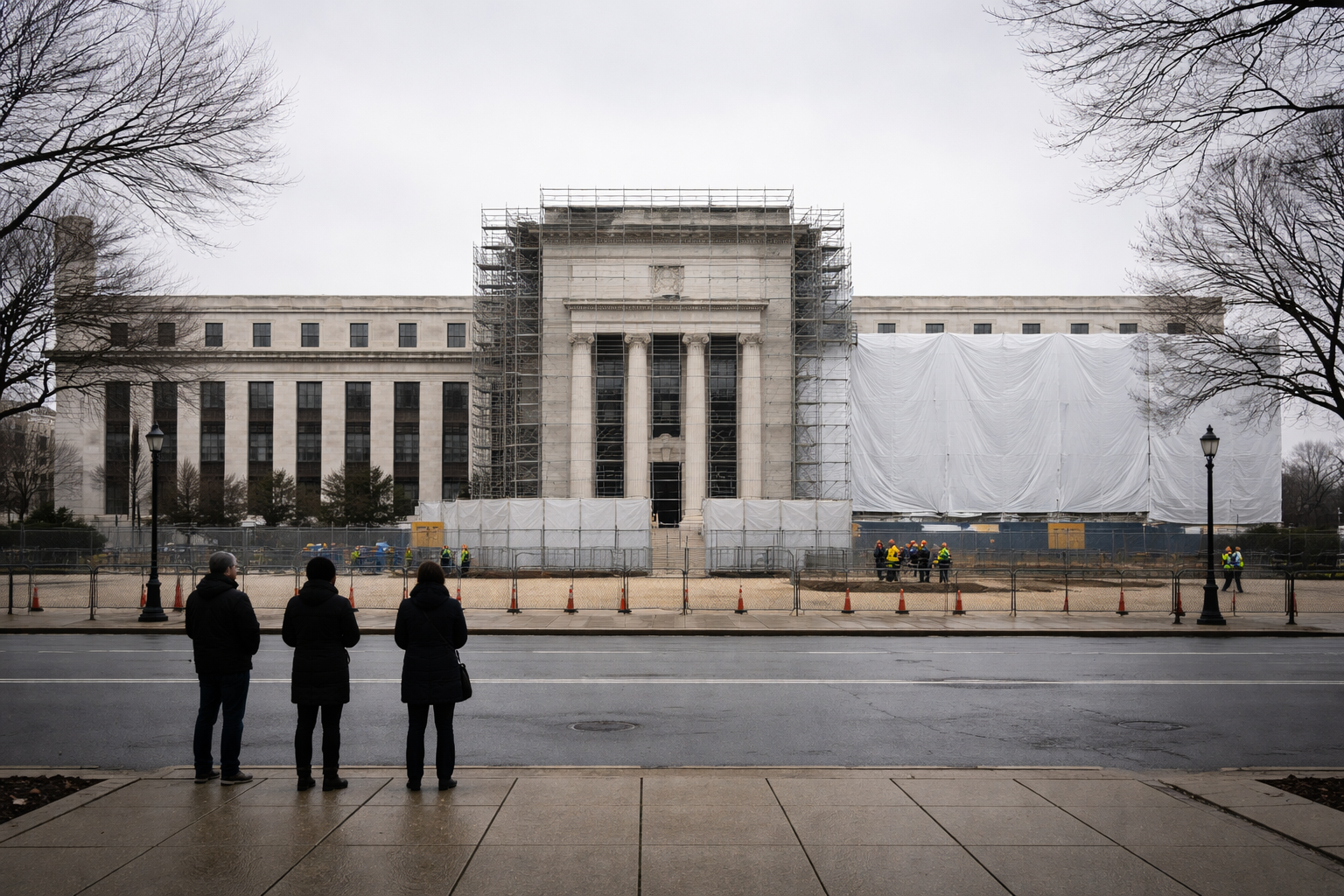
Powell said the Fed received the subpoenas last Friday and that they relate to his June testimony before the Senate Banking Committee about the renovation programme. He has repeatedly defended the work, saying it is needed to remove asbestos and lead and to modernise aging infrastructure. The Fed’s publicly disclosed cost estimate has climbed — official figures show an increase from roughly $1.9 billion to about $2.5 billion — and Powell told lawmakers in June there were no plans for 'V.I.P. dining rooms' or 'special elevators'. Representative Anna Paulina Luna had earlier lodged a criminal referral that helped focus scrutiny on the project.
Disputed figures and narratives
Numbers and narratives diverge. The Federal Reserve and Powell stress a roughly $2.5 billion budget for the overhaul, while some White House figures and sympathetic outlets have repeatedly cited larger totals; The Guardian and others have referenced a $3.1 billion estimate, and President Trump has at times warned the project 'is going to end up costing more than $4 billion.' The Fed says the rise in cost stems from higher materials and labour prices, inflation and unexpected contamination such as asbestos.
Safe-haven flows pushed metals higher while U.S. futures and parts of Europe wavered as investors recalibrated risk.
Political reactions
Lawmakers across the aisle reacted forcefully. Republican Senator Thom Tillis said he would oppose any Fed nominees until the legal matter is resolved; Senate Minority Leader Chuck Schumer called the investigation an 'assault on the Fed's independence'; and Senator Elizabeth Warren accused the president of seeking to 'install another sock puppet' to run the central bank. Economists and market strategists, including Goldman Sachs' Jan Hatzius and University of Liverpool professor Costas Milas, warned the episode has reinforced concerns about the Fed's independence and could unsettle markets.
Administration and instigators
Reporting tied the subpoena push to officials inside the administration: Bloomberg sources named Federal Housing Finance Agency director Bill Pulte as a driving force behind referrals, and multiple outlets reported the inquiry was approved in November by U.S. Attorney Jeanine Pirro, a Trump ally. The president denied direct involvement and told interviewers "I don't know anything about it" while renewing criticism of Powell's handling of the Fed and the renovation.
Market and analyst responses
Banks and strategists flagged nearer-term implications: HSBC said momentum could carry gold to $5,000 an ounce in the first half of 2026; JPMorgan warned of the risk of a steeper Treasury yield curve if markets expect faster Fed easing; and commentators said the episode could elevate risk premia on U.S. assets.
The threat of criminal charges is a consequence of the Federal Reserve setting interest rates based on our best assessment of what will serve the public, rather than following the preferences of the President.
In a video statement Powell said he had served under four administrations and pledged to continue carrying out the Fed's mandate with integrity, arguing the legal threat was a pretext for political pressure.
Different angles in coverage
Coverage highlighted contrasting interpretations: The Economist called the clash 'bizarre' and warned it could escalate, the BBC's economics editor framed Powell's response as potentially seismic for the presidency, and some outlets reminded readers that past politically charged prosecutions were dismissed by courts. The Fed also published FAQs, photos and a virtual tour after Powell's testimony to buttress its account.
What happens next
An investigation does not guarantee an indictment: prosecutors must still convince a grand jury before filing criminal charges. Powell's chair term ends in May, though he can remain on the Federal Reserve's Board of Governors until 2028; senators have warned they may hold up confirmations until the legal questions are resolved, and the Supreme Court is due to hear the related case over the attempted removal of Governor Lisa Cook later this month.
State of play
Officials have confirmed the Federal Reserve was served with grand‑jury subpoenas and that federal prosecutors are investigating; Powell alleges the inquiry is a politically driven pretext intended to bend monetary policy to the president's preferences, while Justice Department spokespeople say only that U.S. Attorneys have been instructed to prioritise investigations of alleged taxpayer‑fund abuse. It remains uncertain whether the inquiry will produce charges — prosecutors must still present evidence to a grand jury — and senators have warned they may hold up Fed confirmations until the legal questions are resolved.
How this page is made
This page is written from dozens of outlets covering the same event, mixing local and international viewpoints to show the full picture and add context you might otherwise miss. It aims to show where outlets agree, where they report different details, and where opinions diverge, with supporting evidence for key claims and a full source list.
We’re launching The Bias on iOS soon. If you’d like to help beta test the app, reach out on Instagram @thebias_app or email sam@thebias.co.uk.
All sources
- ABC News - Top StoriesDOJ launches criminal investigation into Fed Chair Jerome Powell, he says
- Axios - AllTrump's DOJ launches criminal investigation of Fed chair Powell
- BBC - BusinessFaisal Islam: Trump faces extraordinary moment in spat with Fed chair
- BBC - BusinessUS justice department opens criminal probe into Fed chair
- Bloomberg - PoliticsDOJ Serves Fed With Grand Jury Subpoenas
- Bloomberg - TopFed Served with Grand Jury Subpoenas, Heineken CEO Steps Down | The Opening Trade 1/12/2026
- Bloomberg - TopPowell Vows to Stand Firm as Fed Served With DOJ Subpoenas
- Bloomberg - PoliticsFed's Powell Served With DOJ Subpoenas & Iran Protests Intensify | Daybreak Europe 1/12/2026
- Bloomberg - PoliticsBill Pulte Seen as Key Instigator Behind Powell Subpoena
- Bloomberg - TopGold and Silver Storm to Records as Fed Hit With Subpoenas
- CBS News - Top StoriesJustice Dept. served subpoenas to the Fed, Powell says
- CNBC - TopRepublican Sen. Thom Tillis vows to block Trump's Fed nominees following Powell probe
- CNBC - WorldFed Chair Powell says he's under criminal investigation, won't bow to Trump intimidation
- Daily Mail - NewsGOP senator blasts 'unprecedented' probe into Fed chair as Trump savages 'not very good' Jerome Powell
- Daily Mail - NewsFed chair Jerome Powell issues defiant response as federal prosecutors open criminal probe into central bank
- MarketWatch - TopWhy the market is now more sensitive to the latest battle between Jerome Powell and President Trump
- Financial Times - LatestUS prosecutors launch criminal investigation into Fed’s Powell
- NBC News - Top StoriesFed Chair Jerome Powell Says He's Being Investigated By DOJ
- NPR - BusinessDOJ subpoenas the Federal Reserve in an escalating pressure campaign
- Sky News - BusinessUS Fed chair Jerome Powell under criminal investigation
- The Guardian - FrontCriminal investigation into Fed chair Powell has ‘reinforced’ concerns over independence, Goldman Sachs warns – business live
- The Hill - TopTrump on DOJ's Federal Reserve probe: 'I don't know anything about it'
- The Hill - TopTrump-Powell clash intensifies with DOJ probe
- The Independent - WorldTrump says he doesn’t ‘know anything about’ the DOJ’s investigation into the Federal Reserve
- The Independent - WorldUS futures slip while Asian shares gain as Fed chair Powell faces Trump legal threat
- Washington Post - BusinessStock futures waver, dollar slips as DOJ opens criminal probe into Fed chair
- Washington Post - BusinessJustice Department opens a criminal investigation of Fed chair
- Bloomberg - TopEuropean Stocks Muted as Concerns Grow Over Fed Independence
- Bloomberg - TopEmerging Stocks Rise as Asia Tech Shines; Rand Tracks Gold Gain
- Bloomberg - TopCopper Pushes Toward Record on Supply Concerns and Weaker Dollar
- CNBC - TopGold smashes new record of $4,600 as Powell probe and global flashpoints ignite safe-haven rush
- Financial Times - LatestGold hits record high on worries over Fed independence
- The Independent - BusinessGold price soars to new record as US Federal Reserve faces fresh threats
- Bloomberg - TopStocks, Dollar Drop on Fed Fears as Gold Hits High: Markets Wrap
- The Economist - LatestJerome Powell says Donald Trump has launched a criminal investigation against the Fed
- The Economist - LatestThe US in brief: The feds come for the Fed